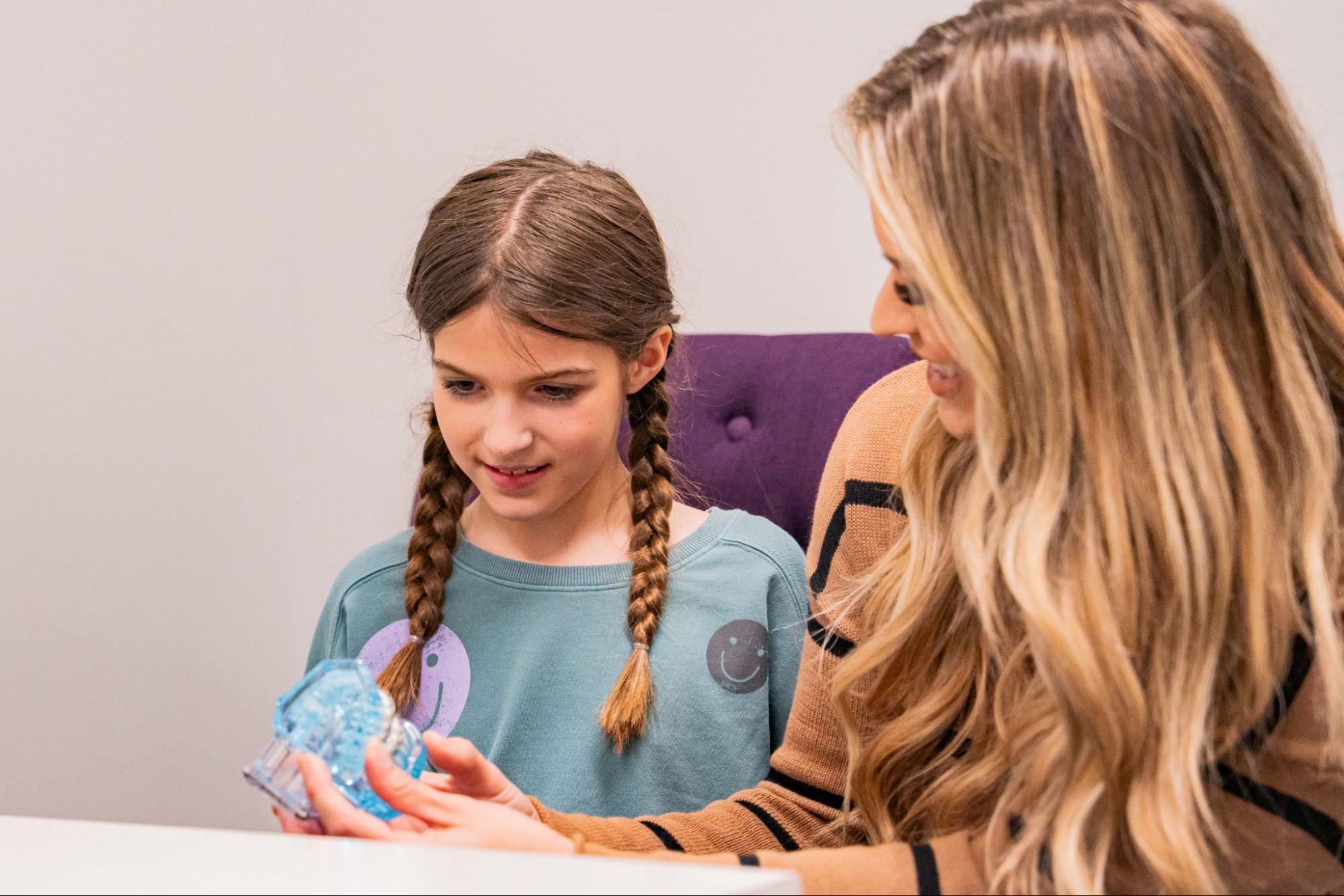
The appointment is on the calendar. Your child is scheduled for their first orthodontist visit, and neither of you knows quite what to expect. Will there be poking and prodding? Will they put braces on right away? Will your child be nervous, uncomfortable, or overwhelmed? And what exactly are you supposed to ask or know going in?
These questions are completely normal. Any unfamiliar medical appointment creates uncertainty, and orthodontics involves enough specialized terminology and equipment that parents often feel out of their depth. Adding your child’s anxiety to your own makes the whole thing feel bigger than it probably needs to.
Here’s the reassuring truth: the first orthodontist appointment is usually easy, comfortable, and even interesting for kids. Nothing painful happens. No one puts braces on during a first visit. The appointment is primarily about gathering information, understanding your child’s development, and giving you clear answers about what, if anything, needs to happen next.
At McClaran Orthodontics, we design first visits to be thorough without being overwhelming and informative without being confusing. You’ll leave knowing exactly where your child stands and what path forward makes sense. That clarity is the whole point.
Why the First Orthodontist Visit Matters
The first orthodontist visit serves purposes that aren’t always obvious to families coming in.
Most importantly, it establishes a baseline understanding of your child’s dental and skeletal development. The orthodontist evaluates not just how teeth are aligned today but how jaws are growing, how the bite is developing, and whether any patterns suggest future problems. This comprehensive view allows for planning that accounts for what’s coming, not just what’s already visible.
The American Association of Orthodontists recommends that every child have an orthodontic evaluation by age seven. This recommendation surprises many parents who associate orthodontics with teenagers. But evaluation isn’t treatment. At age seven, enough permanent teeth have typically emerged to assess development meaningfully, while substantial growth remains ahead to work with if intervention is needed.
Early evaluation catches problems when they’re easiest to address. A narrow palate identified at age seven can be expanded with a simple appliance while the midpalatal suture remains open. The same condition at age fifteen might require surgical assistance. A crossbite caught early can be corrected before it causes asymmetric jaw growth. Waiting allows the asymmetry to become built into bone structure.
The first visit also establishes whether your child needs treatment now, will likely need treatment later, or may not need treatment at all. Many children evaluated at seven are simply monitored with periodic check-ins until the right treatment window arrives. Others benefit from early intervention that addresses specific issues during growth years. Some children have naturally well-aligned teeth and bites that won’t require orthodontic care. The evaluation determines which category your child falls into.
Beyond clinical assessment, the first visit gives your child a chance to experience the orthodontic office in a low-pressure setting. They meet the staff, see the environment, and learn that orthodontic visits aren’t scary. This familiarity reduces anxiety if treatment is eventually needed.
What Happens During the Appointment
Understanding the sequence helps both you and your child feel prepared for what happens at orthodontist visits.
Paperwork and history come first. You’ll complete forms covering your child’s medical and dental history, any concerns you’ve noticed, and insurance information if applicable. Some practices send these forms in advance so you can complete them at home. Mention anything relevant: mouth breathing, snoring, thumb sucking habits, difficulty chewing, or previous dental issues. These details help the orthodontist understand the full picture.
Digital records follow. Modern orthodontic offices use digital scanning rather than the goopy impressions many parents remember from their own experiences. A handheld scanner captures detailed 3D images of your child’s teeth in minutes. The process is comfortable, quick, and actually interesting for most kids who enjoy watching their teeth appear on the screen in real time.
We also take photographs of the teeth and face from various angles. These images document the starting point and help with treatment planning. Some offices take X-rays during the first visit; others wait until treatment planning begins. X-rays reveal tooth roots, unerupted teeth, and jaw structures that aren’t visible clinically.
The clinical examination is the core of the visit. The orthodontist evaluates your child’s teeth, bite, and jaw development through direct observation and the records just gathered. This examination assesses tooth alignment and spacing, how upper and lower teeth fit together when biting, jaw size and relationship, facial symmetry, and any functional issues with chewing or jaw movement.
At McClaran Orthodontics, Dr. McClaran also evaluates airway-related factors. How does your child breathe? Is there evidence of mouth breathing that might affect jaw development? Is the palate narrow in ways that could restrict nasal airflow? These considerations reflect our understanding that orthodontics affects more than smile aesthetics.
Discussion and recommendations conclude the visit. After examining your child and reviewing the records, the orthodontist sits down with you to explain what they observed. This conversation should happen in plain language, not jargon. You should understand what’s going on with your child’s development and why any recommendations make sense.
If treatment is recommended, the orthodontist explains what it would involve, the expected timeline, and the reasoning behind the approach. If treatment isn’t needed yet, they explain what they’re monitoring and when to return. If your child’s development looks healthy and treatment seems unlikely to be needed, they tell you that directly.
How to Prepare Your Child
A little preparation helps the first visit go smoothly, especially for anxious children.
Keep the tone positive and matter-of-fact. Describe the visit as a check-up where the doctor will look at their teeth and take some pictures. Avoid language that implies anything scary or painful will happen. Your calm confidence helps your child feel secure.
Answer questions honestly but simply. If your child asks whether it will hurt, you can truthfully say the first visit doesn’t involve anything painful. The orthodontist will look in their mouth and take pictures, similar to a dental visit but without cleaning or drilling.
Avoid projecting your own experiences. If you had a difficult orthodontic experience decades ago, your child doesn’t need to hear about it before their first visit. Orthodontics has changed substantially. Today’s technology and techniques are more comfortable than what previous generations experienced.
Let them know they can ask questions. Encourage your child to speak up if they’re curious about something or don’t understand what’s happening. Orthodontists who work with children are accustomed to questions and happy to explain things in kid-friendly terms.
Time the appointment well. Avoid scheduling when your child is typically tired, hungry, or cranky. A mid-morning appointment after a good night’s sleep often works better than late afternoon when energy flags.
For particularly anxious children, consider visiting the office beforehand just to see the space and meet the front desk team. Some practices offer this kind of informal introduction. Familiarity with the environment can reduce anxiety substantially.
What to Bring to the Consultation
Coming prepared makes the visit more productive.
Insurance information allows us to verify benefits and provide accurate cost estimates if treatment is recommended. Bring your insurance card and any relevant documentation about orthodontic coverage.
Dental records from your child’s dentist can be helpful, particularly recent X-rays. If your dentist referred you, they may have sent records already. If not, we can request them, but bringing copies speeds the process.
A list of questions ensures you don’t forget to ask about things that have been on your mind. Write down concerns you’ve noticed, questions about treatment options, or anything else you want to discuss. There’s no such thing as a silly question when it comes to your child’s care.
Your child’s input matters too. If your child has specific concerns about their teeth or smile, encourage them to mention those. Kids often notice things parents don’t, and their perspective helps us understand what matters to them.
Patience and time. First visits typically take about an hour, sometimes a bit longer. The thoroughness serves your child well, but plan accordingly. Rushing through a consultation doesn’t benefit anyone.
Questions to Ask the Orthodontist
The first visit is your opportunity to gather information and assess whether this practice is right for your family. Good questions include:
Does my child need treatment now, or should we wait? Understanding timing helps you plan. Some children benefit from immediate intervention; others are better served by monitoring until growth progresses further.
What specific issues do you see? The orthodontist should explain findings clearly, showing you on images or models what they’re observing. You shouldn’t leave confused about what’s happening with your child’s development.
What treatment options would address these issues? When treatment is needed, multiple approaches sometimes exist. Understanding options helps you participate in decision-making.
What would happen if we don’t treat? For some conditions, waiting has consequences. For others, the main impact is cosmetic. Knowing the stakes helps you weigh decisions appropriately.
What does treatment cost, and what payment options exist? Financial transparency matters. The practice should provide clear estimates and explain payment plans, insurance coordination, and any financing options available.
How often would we need appointments during treatment? Understanding the time commitment helps you assess whether the practice’s schedule works with your family’s life.
Comparing First Visit Experiences
| Factor | Thorough First Visit | Rushed First Visit |
|---|---|---|
| Records gathered | Digital scans, photos, X-rays as needed | May skip some records |
| Examination depth | Teeth, bite, jaw, airway evaluated | May focus only on obvious alignment |
| Time with orthodontist | Adequate for thorough exam and discussion | Brief; may feel hurried |
| Explanation of findings | Clear, detailed, visual aids used | May be vague or jargon-heavy |
| Questions welcomed | Encouraged and answered fully | May feel dismissed or rushed |
| Treatment recommendation | Explained with reasoning | May feel like a sales pitch |
| Overall experience | Informative and confidence-building | Confusing or pressured |
A thorough first visit takes time but leaves you informed and confident. Practices that rush through consultations may miss important factors or leave you feeling uncertain about recommendations. The quality of the first visit often reflects the quality of care you’d receive throughout treatment.
What Comes Next
After the first appointment, one of several paths typically follows.
Treatment recommended now means the orthodontist sees issues that warrant prompt attention. This might involve braces, clear aligners, a palate expander, or other appliances depending on your child’s needs. The practice explains the treatment plan, timeline, and costs. You decide whether to proceed.
Monitoring recommended means the orthodontist sees developing patterns worth watching but doesn’t recommend immediate treatment. You’ll return periodically, often every six to twelve months, for the orthodontist to track how teeth are erupting and jaws are growing. When the optimal treatment window arrives, you’ll be ready.
No treatment needed is also a possible outcome. Some children have naturally well-aligned teeth, proper bite relationships, and favorable jaw development. If your child falls into this fortunate category, you’ll know you’ve had a professional confirmation that everything looks good.
Time to decide applies when treatment is recommended but not urgent. You don’t have to commit during the first visit. Take the information home, discuss it as a family, get a second opinion if desired, and contact the practice when you’re ready. Reputable orthodontists don’t pressure families into immediate decisions.
At McClaran Orthodontics, we provide written summaries of findings and recommendations so you have something to reference after leaving. We answer follow-up questions that arise once you’ve had time to process the information. Our goal is confident, informed decisions, not pressured ones.
Frequently Asked Questions About First Orthodontist Visits
At what age should my child first see an orthodontist?
The American Association of Orthodontists recommends an initial evaluation by age seven. At this age, enough permanent teeth have emerged to assess development, but significant growth remains to guide if intervention is needed. Earlier visits are appropriate if you notice specific concerns like crossbite, significant crowding, or difficulty chewing.
Will my child get braces at the first visit?
No. The first visit is for evaluation and information gathering, not treatment. If braces or other treatment is recommended, that happens at subsequent appointments after you’ve decided to proceed. No one will put anything on your child’s teeth during a first consultation.
Does the first orthodontist visit hurt?
No. The examination involves looking in your child’s mouth and taking digital scans and photographs. Nothing painful occurs. Some children find the scanner mildly unusual the first time but not uncomfortable. The experience is far easier than a dental cleaning.
How long does the first appointment take?
Plan for approximately one hour. This allows time for paperwork, records, examination, and thorough discussion of findings. Some visits finish faster; complex situations may take slightly longer. The investment of time produces valuable information.
Is the first consultation free?
Many orthodontic practices, including McClaran Orthodontics, offer complimentary initial consultations. This removes financial barriers to getting the evaluation every child should have. Confirm the practice’s policy when scheduling.
Should I get a second opinion?
If you feel uncertain about a recommendation or want confirmation, seeking a second opinion is completely reasonable. Different orthodontists may suggest different approaches, and comparing perspectives can help you feel confident in your decision.
Starting Your Child’s Orthodontic Relationship
The first orthodontist visit is really about information. What’s happening with your child’s dental and jaw development? Does anything need attention now? What should you watch for going forward? Getting clear answers to these questions empowers you to make good decisions for your child’s care.
At McClaran Orthodontics, we make first visits comfortable, thorough, and genuinely useful. Dr. McClaran takes time to explain findings in language that makes sense. Our team creates a welcoming atmosphere where kids feel at ease and parents feel informed. We serve families throughout Nolensville, Franklin, Brentwood, and the greater Nashville area.
Your complimentary consultation includes everything described in this article: digital records, thorough examination, clear explanation of findings, and honest recommendations. You’ll leave knowing exactly what your child needs and feeling confident about the path forward.
Schedule your appointment and take the first step toward understanding your child’s smile.